How to Add or Remove VAT (UK 20%, 5% and 0%)
Add VAT to a net price or take it out of a gross price with two simple formulas. Includes UK 20% and 5% examples and the common mistake to avoid.
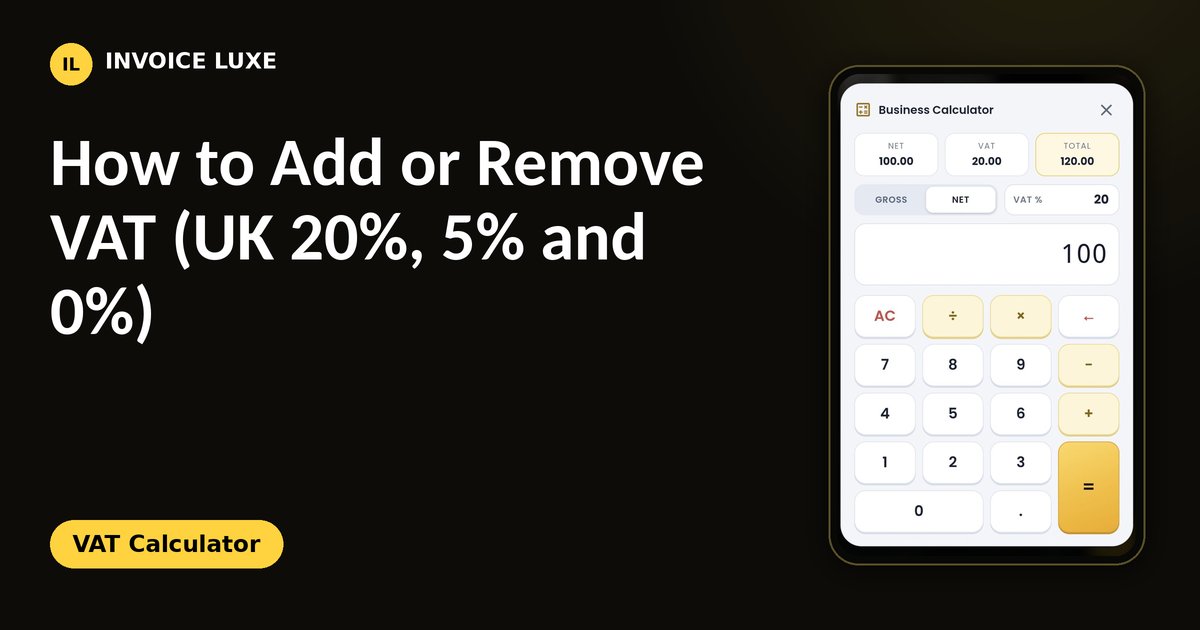
VAT is added to the price of most goods and services in the UK, the EU and many other countries. Adding it takes one multiplication. Removing it takes one division.
The UK standard VAT rate is 20%, with a reduced rate of 5% and a zero rate for some items. Rates can change, so confirm the current rates on GOV.UK.
Add VAT: net price × (1 + VAT rate)
Remove VAT: gross price ÷ (1 + VAT rate)
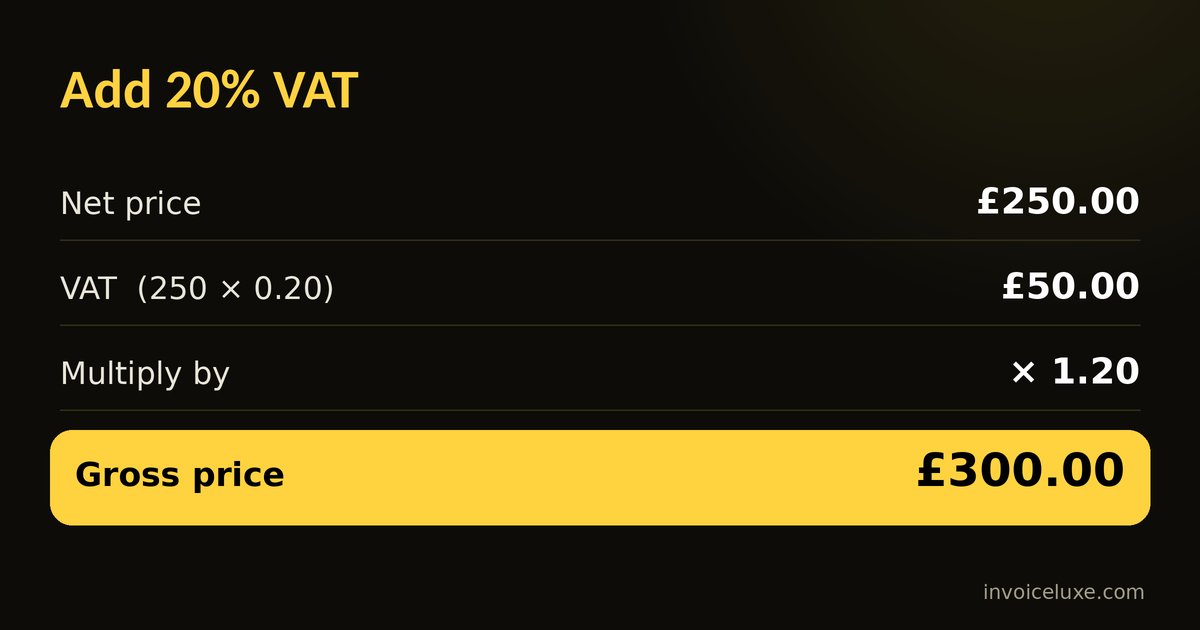
Add VAT to a net price
A service costs £250 before VAT. At 20%:
- VAT: 250 × 0.20 = £50
- Gross price: 250 × 1.20 = £300
Want to try it right away? VAT Calculator is free and needs no signup.
Remove VAT from a gross price
A receipt shows £360 including VAT at 20%:
- Net price: 360 ÷ 1.20 = £300
- VAT: 360 − 300 = £60
The mistake to avoid
Do not subtract 20% from the gross price. That gives £360 × 0.80 = £288, which is wrong. VAT was calculated on the net price of £300, so you must divide by 1.20.
A handy shortcut: at 20% VAT, the VAT in a gross price is one sixth of it. £360 ÷ 6 = £60.
Other rates
| Rate | To add VAT | To remove VAT |
|---|---|---|
| 20% (standard) | × 1.20 | ÷ 1.20 |
| 5% (reduced) | × 1.05 | ÷ 1.05 |
| 0% (zero) | × 1.00 | ÷ 1.00 |
At 5%, £210 gross becomes £200 net, with £10 of VAT.
Use the calculator
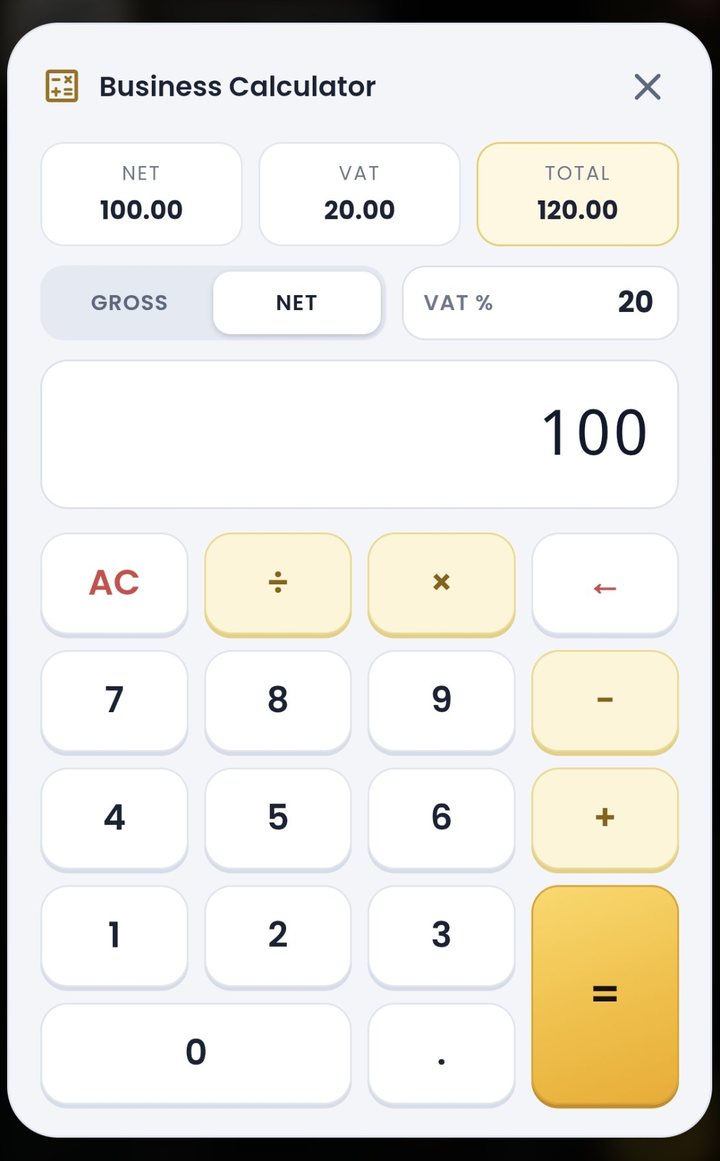
A business calculator that handles net, VAT and total together saves time. Enter the amount, set the VAT percentage and see the net, VAT and total at once.
On your invoice
Show the net price, the VAT rate, the VAT amount and the gross total as separate lines. If you are VAT registered, include your VAT number as well.
FAQ
How do I add 20% VAT to a price?
Multiply the net price by 1.20.
How do I take VAT out of a price?
Divide the gross price by 1.20 for the 20% rate.
What is the VAT on £120 including VAT?
£120 ÷ 1.20 = £100 net, so the VAT is £20.
Is this tax advice?
No. It explains the calculation. For your own VAT obligations, check with HMRC or an accountant.