 Invoice Luxe
VAT Inclusive vs VAT Exclusive: What's the Difference?
Inc VAT or ex VAT? Learn what VAT-inclusive and VAT-exclusive prices mean, how to convert between them and which to show customers.
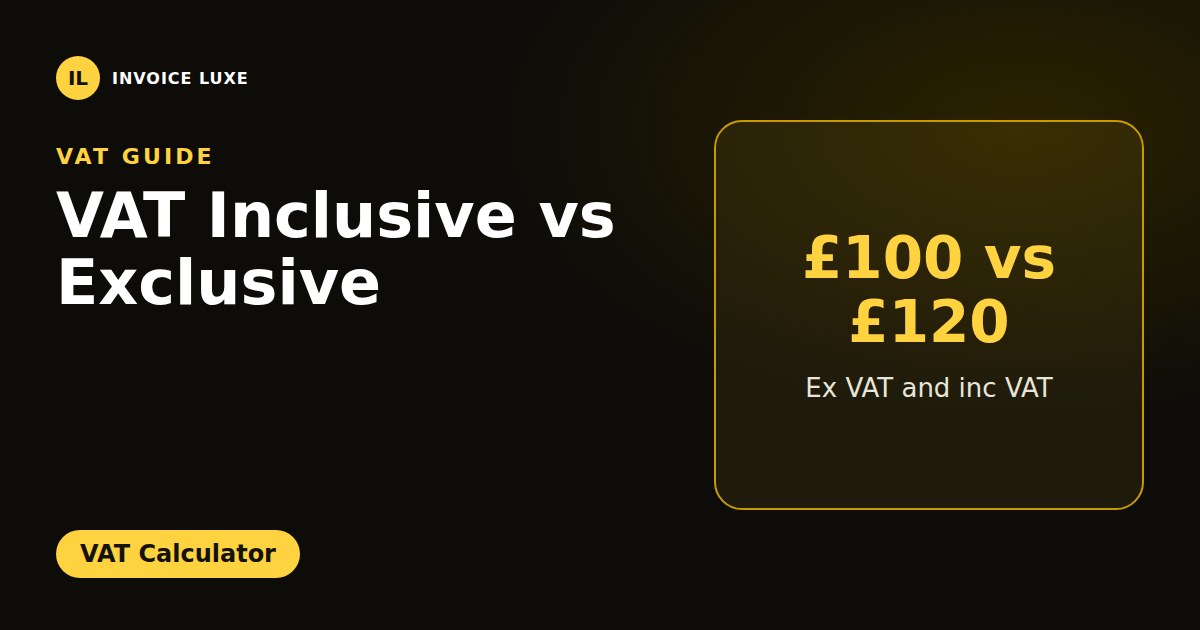
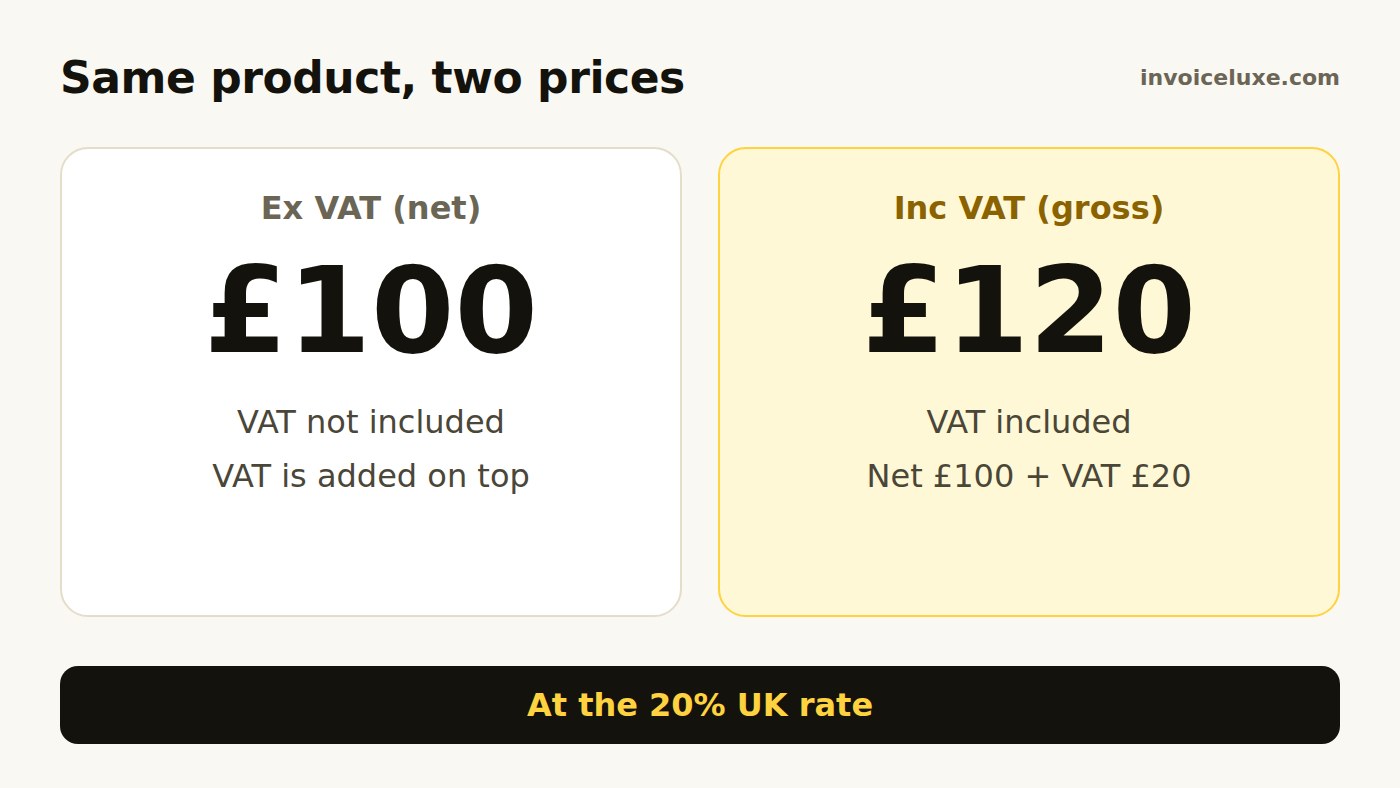
A price including VAT (inc VAT, gross) already contains the tax. A price excluding VAT (ex VAT, net) does not, so VAT is added on top.
Both can describe the same product. They only differ in whether the tax is already in the number.
What do the labels mean?
| You see | Also called | Meaning |
|---|---|---|
| Ex VAT, excl. VAT | Net price | VAT not included |
| Inc VAT, incl. VAT | Gross price | VAT included |
| + VAT | Net price | VAT will be added |
Want to try it right away? VAT Calculator is free and needs no signup.
How do you convert between them?
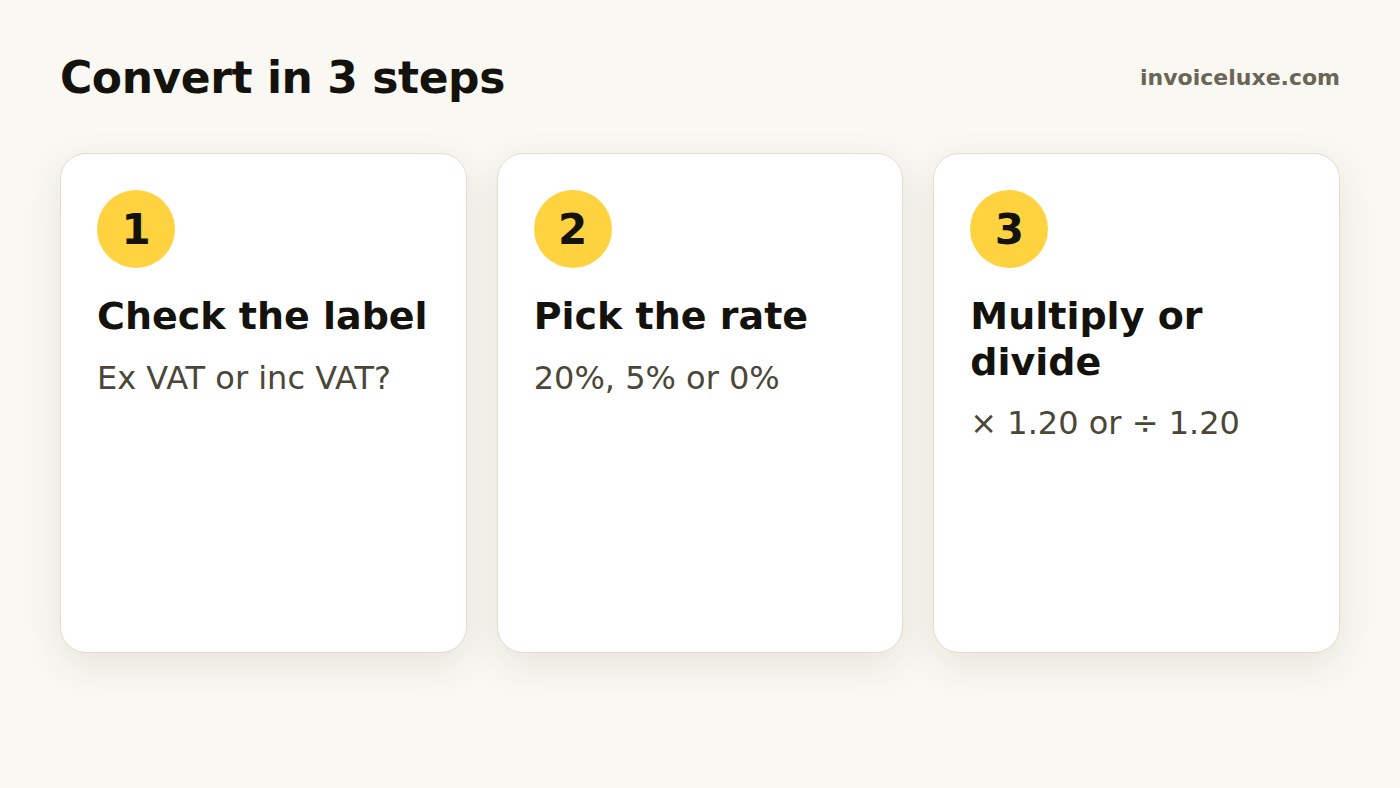
At the UK standard rate of 20%:
- Ex VAT to inc VAT: multiply by 1.20. £1,200 ex VAT is £1,440 inc VAT.
- Inc VAT to ex VAT: divide by 1.20. £1,440 inc VAT is £1,200 ex VAT.
Do not subtract 20% to go back. See how to calculate VAT backwards.
Which price should you show?
- Consumers (B2C): in the UK, prices shown to consumers generally need to include VAT.
- Businesses (B2B): quotes and invoices often show prices ex VAT, because the buyer can usually reclaim the VAT.
Always say clearly which one you mean, for example "£1,200 + VAT".
Why does it matter for your budget?
A £1,200 quote ex VAT costs £1,440 if you cannot reclaim VAT. A business that is VAT registered can usually reclaim it, so the real cost is £1,200. Always check which one you are comparing.
Use the VAT calculator
Enter a price, pick the rate and see both the net and gross amounts. To go further, read how to calculate VAT and how to add or remove VAT.
FAQ
What does inc VAT mean?
It means VAT is already included in the price shown.
What does ex VAT mean?
It means VAT is not included and will be added on top.
How do I convert a price ex VAT to inc VAT?
Multiply by 1 plus the VAT rate. At 20%, multiply by 1.20.
Is this tax advice?
No. For your own VAT obligations, check with HMRC or an accountant.